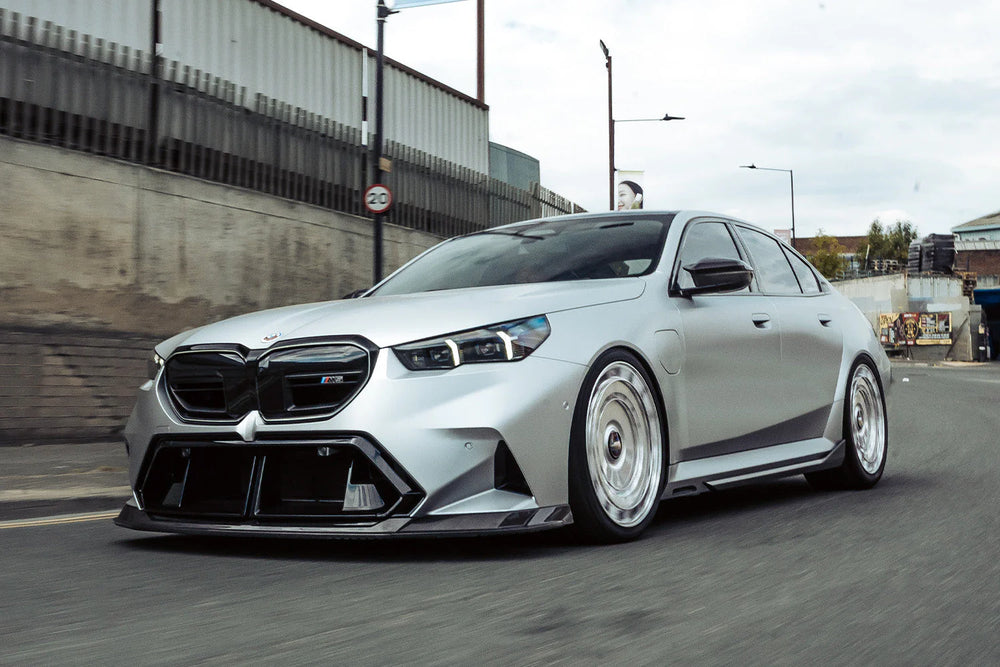



How do you choose the right rim size for your car?
Tech & Fitment – Knowledge Article.
How do you choose the right rim size for your car? Read what to look for regarding inch size, tire height, comfort, and fit.

How to choose the right rim size for your car?
Choosing the right rim size seems simple: bigger often looks better. But in practice, rim size determines much more than just aesthetics. The wrong size can affect driving comfort, road holding, tire costs, and even fit.
In this article, we explain how to choose the right rim size for your car, what to look out for, and which mistakes you'd best avoid.
What exactly does rim size mean?
Rim size consists of several components:
-
Diameter (e.g., 18”, 19”, 20”)
-
Width (e.g., 8.5J or 9.5J)
-
ET-value (offset)
-
PCD (pitch circle diameter)
-
Center bore
Many people only look at the inch size, but the combination determines if a rim truly fits well.
Step 1: Determine the purpose of your setup
Before choosing a size, you need to know what you want:
-
OEM+ look
-
Sporty look
-
Show-oriented
-
Daily use
-
Performance-oriented
A 20-inch rim might be perfect for aesthetics, but less suitable if comfort is a priority.
Step 2: Check the original size
Every car has a factory size as a baseline. You can find it:
-
in the owner's manual
-
on the inside of the fuel filler flap
-
via license plate information
That size is the starting point. From there, you can upgrade responsibly.
Step 3: Consider tire height and comfort
Larger rim = lower tire.
For example:
-
18 inch → taller sidewall → more comfort
-
20 inch → lower sidewall → sharper appearance
But also:
-
less forgiving on poor road surfaces
-
higher risk of damage from deep potholes
A larger rim always requires a conscious trade-off.
Step 4: Pay attention to wheel arch filling and ride height
A larger rim without adjusting ride height can:
-
look high
-
appear less “filled” than expected
Conversely, lowering without the correct rim size can:
-
look unsettled
-
create incorrect proportions
Rim size and ride height must complement each other.
Step 5: Check technical clearance
Important questions:
-
Does the rim fit over the brakes?
-
Is there sufficient space within the wheel arch?
-
Will the combination rub when steering or compressing the suspension?
Here, width and ET-value play a major role.
Common mistakes when choosing rim size
-
Only looking at what “looks good”
-
Going too big without considering use
-
Forgetting that tire sizes change along with it
-
Not taking lowering into account
A rim should not only fit but also be right for the setup.
When bigger is not better
Bigger is not automatically better.
Sometimes:
-
19 inches is sharper than 20 inches
-
18 inches is perfect for a daily driver
-
a subtle upgrade is more impactful than an extreme one
It's about balance, not maximum inch size.
Summary
-
Rim size is more than just inches
-
Usage determines the right choice
-
Comfort and appearance must remain balanced
-
Technical clearance is crucial
-
Balance always triumphs over extremity
The right rim size feels logical, not forced.
Doubts about the right size for your car?
Then it's wise to first look at the overall picture: usage, ride height, and desired appearance. The correct size prevents compromises later on.
